


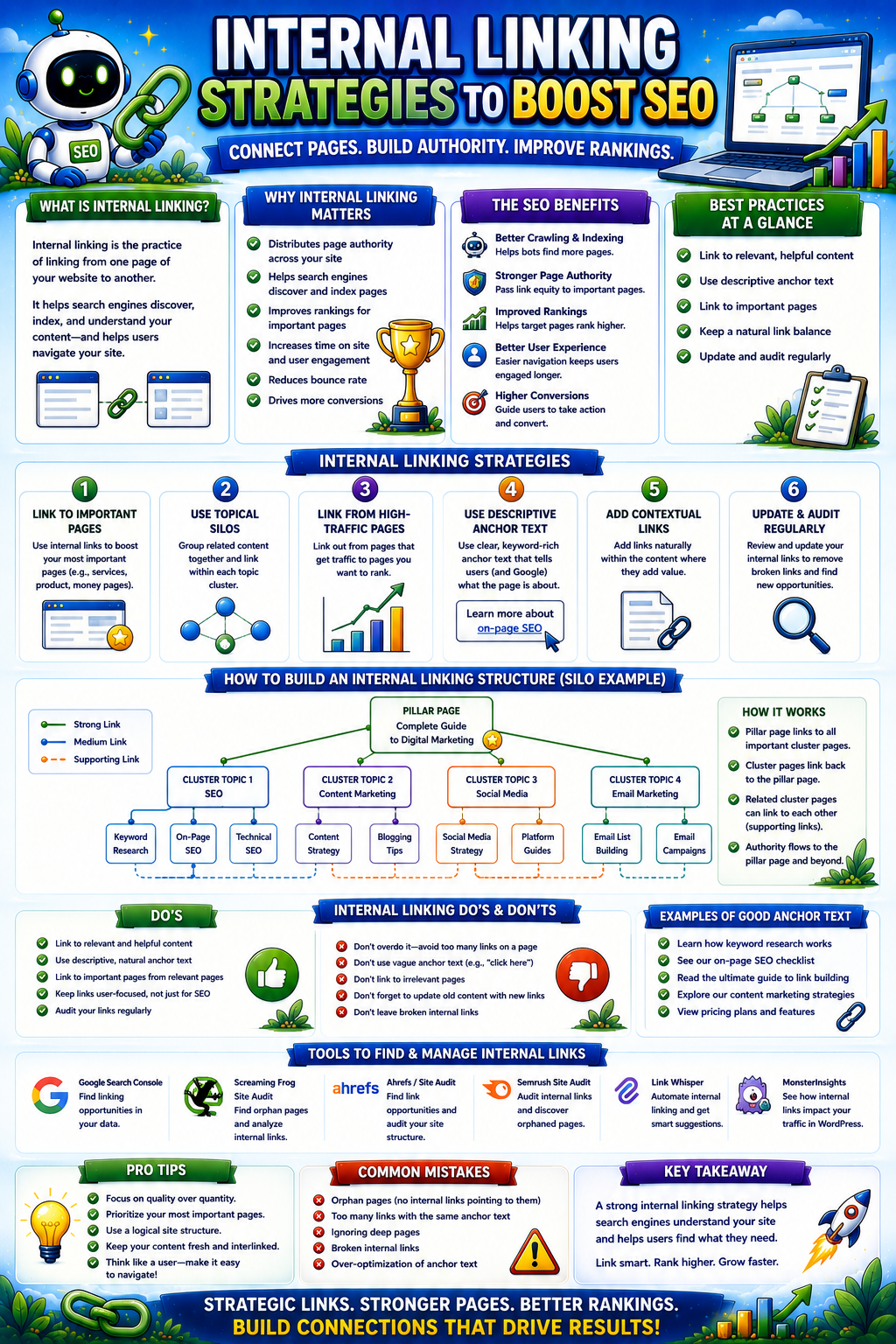
Imagine building a world-class library, packing the shelves with brilliant books, and then locking the front doors. Worse yet, imagine tearing out the index cards so visitors have no clue how the rooms connect.
Many small business owners and SaaS marketers do exactly this to their websites. They spend thousands of dollars producing great blog posts or product descriptions, yet they leave those pages floating in digital isolation.
When you ignore your site architecture, you make it incredibly difficult for Google to crawl your content and even harder for prospective customers to buy from you.
The solution doesn’t require an enterprise budget or a massive digital PR team. Instead, the single most cost-effective way to maximize your organic growth is right inside your own content management system: internal linking for SEO. This guide breaks down the actionable blueprints you need to distribute page authority, guide users toward your checkout pages, and help search engines index your site flawlessly.
What Is Internal Linking?
An internal link is any hyperlink that connects one page on your domain to another page on that exact same domain. If you link from a recent blog post to your main services page, you have created an internal link.
[ Your Homepage ] ➡️ (Navigational Link) ➡️ [ Service Page ]
[ Blog Post A ] ➡️ (Contextual Link) ➡️ [ Blog Post B ]
While external links point away from your site to third-party domains, internal links keep both human visitors and search engine crawlers inside your own ecosystem. We generally divide these links into three distinct functional categories:
- Navigational Links: These make up your main header menu, sidebar directories, and footer blocks. They establish the foundational skeleton of your entire website.
- Contextual Links: These reside directly within your main paragraph text. They tell readers—and search engine bots—that two specific concepts share a strong topical relationship.
- Structural Links: These map out your broader taxonomy, connecting high-level product categories down to individual item variants.
Why Internal Linking Matters for SEO
To understand why this process is so transformative, we need to answer a foundational question: does internal linking help SEO directly? The answer is an absolute yes. Search engine algorithms do not evaluate your web pages in total isolation; they look at how your entire domain functions as an interconnected web.
Boosts Crawlability and Indexation
Search engine bots use automated crawlers to discover content across the internet. When a bot lands on your homepage, it follows your links to find deeper subpages. If a page has zero links pointing to it, it becomes completely invisible to automated systems, drastically lowering your overall crawlability.
Distributes Page Authority (Link Juice)
When an authoritative publication links to your website, that page gains a significant amount of algorithmic trust. We refer to this raw SEO power as link equity or “link juice.” By strategically linking from your highest-performing pages down to newer or lower-ranking posts, you manually pass that valuable trust throughout your site.
[ High-Authority Page ] (Earned Backlinks)
|
+——–+——–+ (Strategic Internal Links)
| |
[ New Article ] [ Service Page ]
Enhances User Experience and Time on Site
When you provide helpful, relevant reading recommendations inside your text, users naturally stay on your site longer. They click through to read a related case study, look at your pricing structure, or check out your service options. This extended engagement signals to search engines that your domain provides genuine value.
Establishes Content Hierarchy Through Topic Clusters
Search engines want to see that you possess deep expertise in your industry. By using a hub-and-spoke model—where a broad, comprehensive guide links out to shorter, highly specialized articles—you build an undeniable SEO hierarchy. This structure demonstrates undeniable topical relevance to search engine bots.
Internal Linking Best Practices
Creating an optimized site architecture requires a deliberate approach. Incorporate these foundational internal linking best practices to ensure your site updates yield maximum visibility.
1. Use Descriptive Anchor Text
The visible, clickable text in a hyperlink is called the anchor text. Avoid lazy phrasing like “click here,” “read more,” or “our services.” Instead, use specific, keyword-rich phrases that describe exactly what sits on the other side of the link.
- ❌ Poor Example: To learn about our optimization options, [click here].
- ✔️ Optimized Example: Check out our comprehensive [on-site SEO services] to identify hidden technical issues.
2. Link Only to Highly Relevant Content
Every link on your site must serve a concrete purpose. Do not link a paragraph about business accounting to a blog post about office pet policies just to increase your link count. Prioritize connections that offer real educational value to a human reader.
3. Maintain a Clean, Logical Structure
Your site layout should resemble a structured pyramid, not a tangled web. A visitor should be able to navigate from your homepage down to your deepest subpage in three clicks or less. This intentional containment prevents your crawl depth from burying your most profitable landing pages.
[ Homepage ]
|
+————-+————-+
| |
[ Category Page ] [ Category Page ]
| |
+—–+—–+ +—–+—–+
| | | |
[Subpage] [Subpage] [Subpage] [Subpage]
4. Locate and Fix Orphan Pages
An orphan page is a live page on your website that has absolutely zero internal links pointing to it from any other section of your domain. Because search bots cannot naturally discover them through crawling, these pages rarely rank on the Google SERP. Regular technical audits are necessary to ensure every piece of content stays connected to your core architecture.
5. Keep Your Link Count Balanced
A common question among digital marketers is: how many internal links per page should you include? While search engine algorithms can technically process hundreds of links on a single URL, you should aim for a natural balance. For a standard 1,500-word blog post, 5 to 10 highly targeted internal links will look clean, maintain a premium user experience, and prevent your content from feeling spammy.
How to Audit and Improve Your Internal Links
You do not need to guess where your site architecture is broken. You can systematically optimize your domain by following a simple tech audit workflow.
Step 1: Crawl Your Domain
Use dedicated data crawlers like Screaming Frog or comprehensive marketing platforms like Ahrefs to run a full diagnostic sweep of your URL structure. These tools will automatically flags broken links, redirect loops, and disconnected pages.
Step 2: Review Your Organic Performance via Google Search Console
Open your free Google Search Console dashboard and look at your performance metrics. Identify pages that sit right on the edge of page one rankings (positions 11-15). These URLs are prime targets to receive an immediate algorithmic boost.
+————————————+
| INTERNAL LINK AUDIT WORKFLOW |
+—————–+——————+
|
+———————–+———————–+
| |
+——-v——-+ +——-v——-+
| Identify | | Find Top- |
| Pages on | | Performing |
| Edge of | | Pages with |
| Page 1 | | High Link |
| Rankings | | Equity |
+——-+——-+ +——-+——-+
| |
+———————–+———————–+
|
+——-v——-+
| Inject Fresh |
| Contextual |
| Links to Pass |
| Equity Down |
+—————+
Step 3: Pass Equity From High-Power Pages
Find your top-performing pages—the ones that have naturally earned the most external backlinks over time. Edit those high-power pages and inject fresh, contextual internal links pointing directly to the underperforming URLs you identified in Step 2. This direct hand-off helps lift your secondary pages higher up the search results.
Examples of Effective Internal Linking structures
To see how these internal linking strategies function in the real world, let’s look at a typical e-commerce store before and after implementing a structural overhaul.
The Fragmented Approach (Before Optimization)
An online clothing retail site publishes an excellent blog post titled “How to Choose the Right Waterproof Winter Coat.” Within the text, they mention several jacket styles but include zero links. The reader finishes the article, closes the tab, and buys their gear from a competitor. The search engine crawler indexes the article but sees no connection to the store’s transactional pages.
The Cluster Optimization Approach (After Optimization)
The brand updates the article to follow modern SEO linking structure guidelines. Now, the text features clear, descriptive anchor links embedded directly into the content:
“When preparing for extreme sub-zero temperatures, choosing a premium [down-filled parka] provides the highest thermal protection, while a lightweight [synthetic windbreaker] is ideal for active winter sports.”
Now, search engine bots instantly understand which commercial pages match those specific search terms. Meanwhile, users can seamlessly transition from reading an educational guide to exploring a product page, dramatically shortening the path to purchase.
Common Mistakes to Avoid
Even seasoned digital marketers can run into issues if they rely on outdated on-site SEO habits. Keep these major pitfalls off your radar:
- Using identical anchor text for different pages: If you use the exact phrase “marketing tips” to link to five completely different articles, search engines will struggle to understand which page is the definitive authority for that topic.
- Linking exclusively to your homepage: Your homepage naturally has plenty of visibility. Focus your link distribution on your deep informational assets and primary product pages to maximize conversion opportunities.
- Ignoring mobile responsive layouts: Ensure your text links are easy to tap on smaller mobile screens. Clumping five hyperlinks into a single tight paragraph makes clicking a nightmare for mobile device users.
Conclusion & Next Steps
Mastering how to do internal linking is one of the smartest, most cost-effective investments you can make for your website. By establishing a logical layout, fixing orphan pages, and passing your earned authority down to crucial service pages, you give your existing content the absolute best chance to rank on Google. For a deeper look at how search engine algorithms process structural data, read the official documentation on Google Search Central.
Fixing a fragmented site architecture, building clean topic clusters, and running deep crawling audits takes an immense amount of time and precision. If you want to skip the guesswork and unlock hidden ranking potential, expert assistance can help accelerate your results.
Want to see how your site’s internal linking can be improved? Our team at SeoProsecco offers free internal link audits that reveal missed opportunities and help boost your SEO performance. Contact us today to get your custom report.