


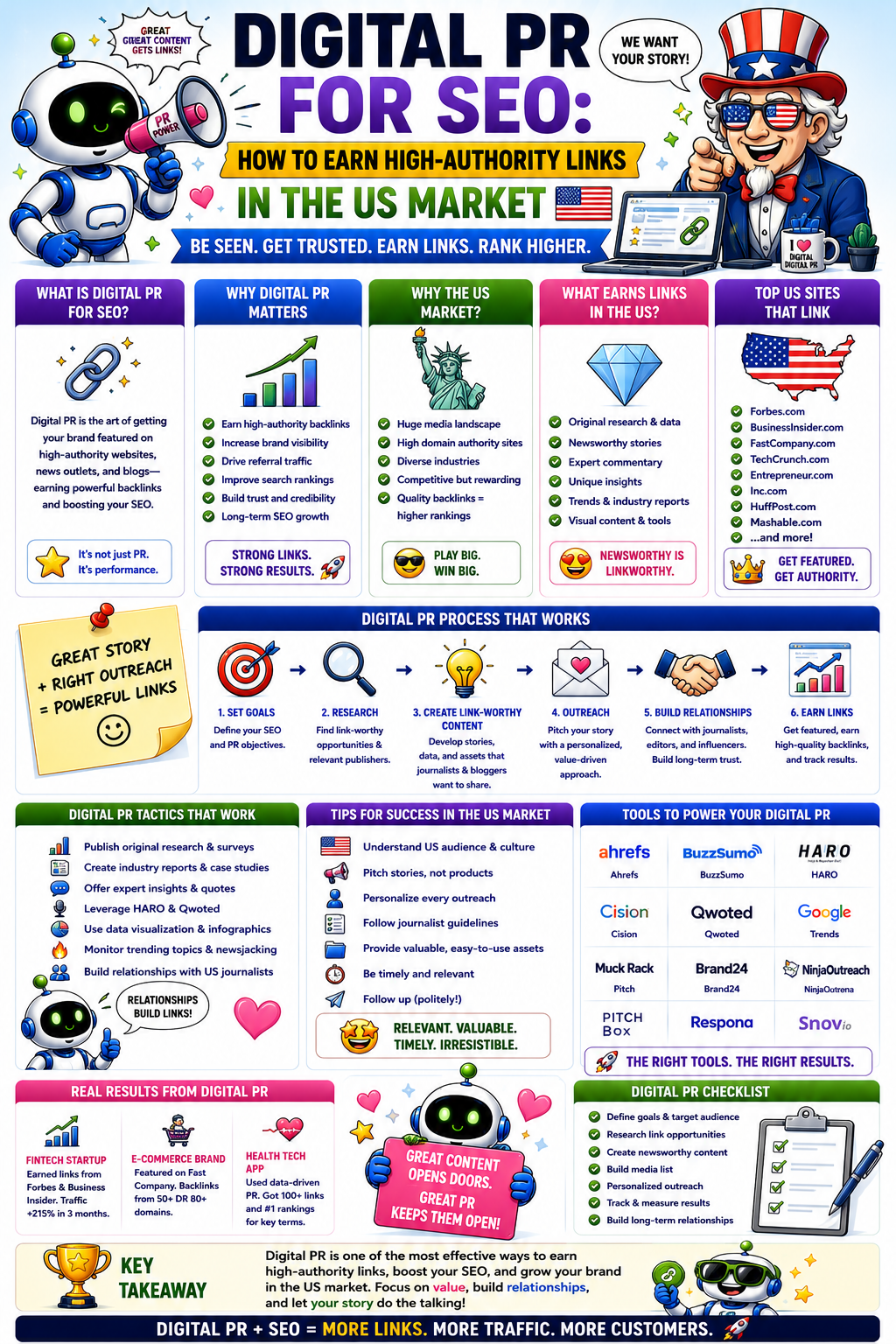
Every SEO professional knows the fundamental paradox of modern search engine optimization: high-authority backlinks from major publications are critical for building domain authority and unlocking top-tier rankings, yet almost no one has a reliable system for acquiring them.
Traditional tactics like guest posting, directory submissions, and link exchanges produce signals that Google’s algorithms increasingly devalue or ignore. Direct paid link placements blatantly violate search engine guidelines and introduce severe penalty risks. Meanwhile, traditional PR agencies that specialize in placing brands in outlets like Forbes or Business Insider rarely understand SEO deeply enough to ensure that earned media translates into followed links to strategically important URLs.
Digital PR for SEO bridges this gap. It applies public relations methodologies—such as newsworthy storytelling, proprietary research, and direct media relations—to achieve technical search objectives. It is neither traditional PR with a link-building afterthought nor traditional link building masked under a PR narrative.
Executing digital PR in the competitive US market requires a clear understanding of journalist expectations, publication standards, and editorial gatekeeping. This guide covers what a digital PR strategy entails, why editorial links deliver exceptional value, how to execute data-driven campaigns, and how to avoid mistakes that result in press coverage without SEO impact.
What Is Digital PR for SEO — and What It Isn’t
To build a scalable link acquisition program, you must establish clear boundaries between digital PR, traditional PR, and traditional link building.
+------------------------+------------------------------------+-------------------------------------+-----------------------------------+
| Feature                | Digital PR for SEO                 | Traditional PR                      | Traditional Link Building         |
+------------------------+------------------------------------+-------------------------------------+-----------------------------------+
| Primary Metric         | Followed links, Domain Authority   | Brand reach, sentiment, coverage    | Link volume, target anchor text   |
| Content Approach       | Original research, data, tools     | Press releases, corporate news      | Guest posts, resource listings    |
| Link Quality           | High-authority editorial links     | Secondary consideration / variable  | Low-to-mid tier, variable value   |
| Primary Target Audience| Journalists, editors, SEO growth   | Consumers, investors, general public| Blog owners, webmasters           |
+------------------------+------------------------------------+-------------------------------------+-----------------------------------+
Digital PR for SEO Defined
Digital PR for SEO is the practice of creating genuinely newsworthy content—such as original research, proprietary datasets, or expert-driven commentary—and pitching it to journalists to earn followed editorial links from high-authority domains.
The primary metric of success is the organic growth enabled by link equity passed to target landing pages.
How It Differs from Traditional PR
Traditional PR measures success through brand awareness, message reach, media mentions, and overall sentiment. To a traditional PR agency, a brand mention in The Wall Street Journal without a hyperlink is a major victory.
To an SEO strategist, coverage without a link—or coverage that features a rel="nofollow" attribute—delivers brand visibility but minimal direct link equity. Digital PR ensures that media outreach explicitly targets linkable assets on strategic landing pages.
How It Differs from Traditional Link Building
Traditional digital PR link building differs from low-tier outreach in both content quality and relationship management. Standard link-building tactics often rely on acquiring placements through guest blogging, broken link replacement, or direct monetary transactions.
Google’s algorithms actively identify and devalue these patterns because they operate outside natural editorial discretion. Digital PR earns links as a natural byproduct of journalism, producing the exact type of external validation that Google’s algorithm is designed to reward.
Why High-Authority Editorial Links Produce Disproportionate SEO Value
In search engine optimization, link equity distribution is non-linear. A single followed link from a high-authority publication can exert a greater influence on domain authority than hundreds of links from low-tier blogs.
[ Tier 1 Publication (e.g., TechCrunch, NYT) ]
                       │
                       ▼ (Passes High Authority & Editorial Trust)
          [ Primary Research Asset Page ]
                       │
                       ▼ (Internal Link Equity Distribution)
   ┌───────────────────┴───────────────────┐
   ▼                                       ▼
[ Key Product/Service Page ]       [ Strategic Category Hub ]
Advanced PageRank and Authority Transfer
Google’s PageRank and topical authority models evaluate the trust and standing of the linking domain. Major US media outlets possess extensive backlink profiles, high domain trust, and constant indexation.
When a Tier 1 news site links to your content, it transfers a portion of that accumulated trust to your domain. This enables search engines to index your pages faster and assign higher trust to your overall site architecture.
Stronger Contextual and Relevance Signals
High-authority editorial links SEO benefits extend beyond raw PageRank. When an editor includes your link within a news article or analytical piece, search engine algorithms analyze the surrounding text to evaluate topical relevance.
This context signals to search engines that your domain is an authoritative source within that specific field.
Natural Anchor Text Variety
Manipulated link campaigns often fail due to over-optimized anchor text patterns that trigger algorithmic filters. Editorial links naturally feature varied anchor text—such as brand names, article titles, or contextual phrases.
This natural distribution protects your domain from penalties associated with artificial link schemes, as outlined in Google’s spam policies.
The Secondary Coverage Effect
A major advantage of digital PR is its compounding impact. When a primary US media outlet covers a data study, regional outlets, industry newsletters, and syndicated blogs frequently reference the story and link back to the original source.
This secondary coverage generates additional backlinks across multiple domains without requiring extra outreach effort.
What Types of Content Earn High-Authority Links in the US Market
To earn high-authority links in the US, content assets must satisfy the citation standards of journalists and editors.
Original Data and Research Studies
Proprietary data serves as a reliable format for securing tier-one links in the US market. Reporters covering technology, finance, and consumer trends operate under strict deadline pressures and require factual data points to support their stories.
Raw Industry / Platform Data ──► Ethical Data Analysis ──► Surprising Counter-Trend ──► Tier 1 Editorial Coverage
A survey of 500 to 1,000 targeted consumers or professionals, executed through a verified research panel and analyzed objectively, provides the foundation for an outreach campaign. To gain traction, the findings should highlight unexpected trends or challenge conventional wisdom.
Reactive PR and Expert Commentary
US news cycles move rapidly. Journalists regularly seek expert commentary to add context to breaking news, economic shifts, or industry developments.
Executing reactive PR requires constant media monitoring via platform feeds, Google Alerts, or platforms like Connectively. When an industry-defining event occurs, delivering commentary from an in-house expert to targeted reporters within hours can secure valuable editorial citations.
Compelling Visual or Interactive Content
Data visualisations, proprietary maps, and interactive tools earn links by simplifying complex information.
US publications frequently embed well-designed infographics or interactive calculators directly into their digital articles, providing a natural opportunity to secure credit links back to the original tool page.
Trend Analysis and Proprietary Industry Indices
Organizations with access to first-party transactional, user, or platform data can publish recurring index reports.
By publishing quarterly or annual industry benchmarks, a brand can establish an authoritative resource that journalists return to whenever they cover relevant market trends.
How to Identify and Pitch US Journalists and Publications
Media relations in the US market require a nuanced understanding of publication structures and editorial expectations.
+------------------------+--------------------------------------------+-------------------------------------------+
| Tier Level             | Example Outlets                            | Strategic Link Characteristics            |
+------------------------+--------------------------------------------+-------------------------------------------+
| Tier 1: National Media | Wall Street Journal, NYT, Washington Post  | Highest authority, extremely strict gatekeeping|
| Tier 2: Major Tech/Biz | TechCrunch, Business Insider, Fast Company | High domain trust, strong industry context|
| Tier 3: Industry Trade | Niche B2B journals, specialized blogs      | High topical relevance, often followed links|
+------------------------+--------------------------------------------+-------------------------------------------+
Understanding the US Publication Ecosystem
The US media ecosystem spans three primary tiers:
-
Tier 1: National outlets (The Wall Street Journal, The New York Times, The Washington Post). These provide maximum reach and trust, but feature stringent editorial standards.
-
Tier 2: Major trade and business sites (TechCrunch, Business Insider, specialized industry media). These offer high topical relevance and domain value.
-
Tier 3: Regional publications and niche trade sites. These are often easier to secure and provide focused topical relevance that supports specialized SEO campaigns.
Note on Contributor Networks: Contributor networks differ significantly from staff-written editorial coverage. Many major publications enforce strict nofollow or sponsored link policies on contributed posts. For an effective digital PR strategy, focus outreach efforts on staff reporters and active freelancers.
Finding the Right Journalists
Generic pitch lists yield low response rates. Successful outreach relies on identifying reporters who actively cover your specific topic, have published related stories recently, and consistently include outbound attribution links in their pieces.
Reviewing a journalist’s recent articles helps ensure that your pitch aligns directly with their current beat.
Pitching in the US Market — What Works and What Doesn’t
US journalists handle high volumes of daily email. Effective pitches are concise, story-driven, and clearly state their value proposition immediately.
[ Clear, News-Hook Subject Line ]
               │
               ▼
[ 1-2 Sentence Core Data / Finding ] ──► [ Link to Full Data Asset ] ──► [ Expert Quote Availability ]
-
Lead with the data hook: Present key findings, statistics, or counter-intuitive trends upfront rather than introducing your brand.
-
Respect their time: Keep pitches under 200 words, using clear language and bullet points for readability.
-
Provide immediate asset access: Host full research methodology, charts, and raw datasets on an unlisted landing page or public folder for easy editorial review.
-
Avoid broadcast pitching: Sending generic emails to hundreds of contacts damages media relationships. Tailor every pitch to demonstrate familiarity with the recipient’s recent work.
Ensuring Coverage Produces SEO Value — Not Just Brand Mentions
A common point of failure in digital PR is generating media coverage that fails to deliver measurable search engine optimization value.
                            ┌──► Followed Link to Target Landing Page ──► [ High SEO Value ]
                            │
Media Coverage Secured ─────┼──► Nofollow / Unlinked Brand Mention     ──► [ High PR Value / Zero Direct SEO Equity ]
                            │
                            └──► Followed Link to Press Release Domain ──► [ Isolated Value / Low Ranking Impact ]
Securing Followed Links, Not Just Mentions
While brand mentions contribute to entity recognition, followed backlinks remain a key driver of link equity transfer.
To maximize link placement potential, ensure your underlying campaign asset offers clear utility—such as interactive tools, complete research reports, or downloadable datasets—that journalists naturally want to reference as a source.
If a publication covers your campaign but omits a link, follow up with a brief note offering access to the full dataset or supporting visual assets to help complete their article reference.
Linking to the Right Pages
To maximize efficiency, host your digital PR assets directly on canonical, indexable site architecture—not on isolated press subdomains or standalone micro-sites.
By placing research reports on URLs that internally link to key product or category pages, you ensure that earned link equity flows efficiently through your broader site structure.
Tracking Coverage and Links Systematically
Maintain a centralized system to audit incoming media coverage. Record each placement using the following metrics:
-
Linking Status: Followed vs. Nofollow vs. Unlinked Mention
-
Target URL: Strategic Page vs. Homepage vs. Asset Page
-
Domain Authority / Organic Traffic Profile of the Referring Site
-
Indexation Status in Google Search Console
Tracking these variables over time reveals which content formats and angles consistently yield followed links, allowing you to refine your future data-driven PR efforts.
Realistic Timelines and Success Metrics for Digital PR
Digital PR requires upfront planning and execution. Establishing realistic timelines prevents premature campaign cancellation before full organic SEO benefits manifest.
Campaign Phase Execution:
[ Weeks 1-2: Ideation & Data ] ──► [ Weeks 3-4: Asset Production ] ──► [ Weeks 5-6: Media Pitching ] ──► [ Weeks 7-8: Link Indexation ]

SEO Performance Impact:
Month 1: Initial Placements ──► Months 2-3: Secondary Pickups ──► Months 3-12: Ranking & Authority Growth
Execution Timeline (Weeks 1 to 8)
-
Weeks 1–2: Topic research, dataset sourcing, survey deployment, and methodology verification.
-
Weeks 3–4: Data analysis, copywriting, visual asset design, and landing page deployment.
-
Weeks 5–6: Tiered media outreach, follow-ups, and reactive pitching.
-
Weeks 7–8: Coverage tracking, link reclamation, and internal link distribution optimization.
Evaluation Horizon
-
Short-Term (0–30 Days): Track direct media response, total earned coverage volume, publication tier mix, and initial followed link counts.
-
Medium-Term (1–3 Months): Monitor referring domain acquisition, track indexed links, and analyze domain authority trends.
-
Long-Term (3–12 Months): Evaluate keyword ranking improvements across targeted commercial landing pages and track secondary organic backlinks acquired through asset citation.
Over a 12 to 18-month period, a structured digital PR program creates a defensible backlink profile that competitors cannot easily match through traditional link acquisition tactics.
Common Digital PR Mistakes That Waste Budget and Time
Avoiding operational missteps is essential for maintaining a positive return on investment across digital PR campaigns:
-
Pitching non-news items: Repackaging common knowledge or basic product updates as “research” fails to generate journalist interest or editorial backlinks.
-
Targeting incorrect publication tiers: Pitching niche stories exclusively to Tier 1 national outlets often leads to high rejection rates. Align your story’s scope with the appropriate media tier.
-
Isolating PR assets on subdomains: Hosting campaign assets on secondary press subdomains disconnects them from your main link graph, reducing overall SEO benefit.
-
Treating digital PR as a one-off test: Running a single campaign rarely transforms domain authority. Sustainable organic growth requires a consistent, recurring program.
-
Failing to track link types: Generating press coverage without auditing whether links are followed obscures overall campaign efficacy.
-
Overlooking niche trade media: High-authority trade publications provide strong topical relevance signals that can outweigh non-editorial brand mentions in mainstream media.
-
Confusing contributor networks with editorial PR: Guest posts published via open contributor networks do not equal earned media coverage, and their overall link equity value continues to decline.
Conclusion and Next Steps
Digital PR for SEO provides a scalable, defensible methodology for earning high-authority editorial links in the competitive US market. By pairing data-driven storytelling with media outreach, your business can build an authoritative backlink profile that drives organic ranking growth.
Begin by conducting an internal audit of your backlink profile. Evaluate the proportion of referring links stemming from true editorial media versus directories, guest posts, or low-tier syndication sources. Identify core topic areas within your industry where proprietary data or expert insights can serve as the foundation for your next outreach campaign.
For a comprehensive analysis of your link profile and competitive opportunity, explore our strategic SEO services or schedule a free digital PR assessment with our team.